Boat Lift Installation & Repair in Lenoir City, TN — Protect Your Investment on Fort Loudoun Lake
Protect your boat investment with properly sized and installed boat lifts on Fort Loudoun Lake.
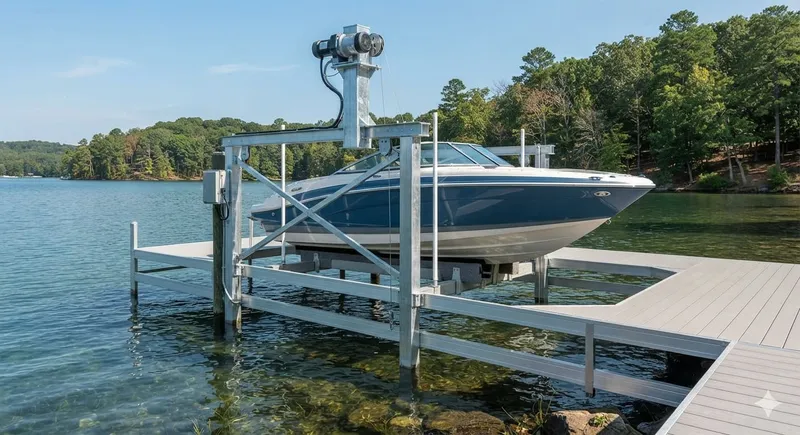
How Boat Lift Installation Works
Boat lift installation starts with matching the lift to your boat and dock, then ends with testing the lift under load before we leave. Getting the capacity right is the most important step — an undersized lift is dangerous and wears out fast.
Lift capacity assessment
We weigh your boat — or check the manufacturer spec — and match the lift to the fully loaded weight plus a 20% safety margin. Undersizing a lift burns out motors and bends frames.
Mounting configuration (on-dock vs. freestanding)
Most lifts mount on the dock frame. Freestanding lifts sit on the lakebed independently. Your shoreline depth and dock frame strength determine which configuration works.
Power source (manual vs. electric)
Manual lifts use a hand wheel — affordable and reliable, but slow. Electric lifts use a motor with a push-button — convenient, but the motor needs maintenance and a power source at the dock.
Installation & testing
We mount the lift, run the cables, set the cradle, and test it under load before we leave. If the lift does not raise your boat smoothly, we adjust it until it does.
Signs Your Boat Lift Needs Service
Boat lifts give clear warning signs when something's wrong. If you notice any of these during operation, stop using the lift and call for service before the problem gets worse — and more expensive.
Motor won't raise or lower
We handle motor won't raise or lower with the specific knowledge and equipment needed for Fort Loudoun Lake conditions.
Cables fraying or rusted
Frayed cables are a safety hazard. A snapping cable under load is dangerous. Inspect cables annually and replace every 5-7 years, or sooner if you see rust or broken strands.
Cradle or bunks damaged
The cradle holds your boat. If bunks are cracked, bent, or rotting, the boat is not supported evenly — which can distort the hull. Replace damaged bunks before they damage the boat.
Lift struggling under boat weight
If the lift hesitates, groans, or stalls when raising your boat, it is undersized or the motor is failing. Either way, stop using it before something breaks. We assess capacity and motor condition.
Unusual noises during operation
Grinding, squealing, or clicking sounds mean something is wrong — a bearing, a gear, a cable guide. Noises do not fix themselves. Call for service before the small problem becomes a motor replacement.
Why Boat Lifts Fail on Fort Loudoun Lake
Fort Loudoun Lake's water level changes stress boat lifts in ways stationary-water lifts don't experience. The annual 3-5 foot winter drawdown means the lift frame and cradle cycle between deep and shallow water. If the lift isn't adjusted for the drawdown range, the cradle can hit bottom or the cables can go slack and tangle. Corrosion is the other major factor — the lake water, combined with the wet-dry cycle from drawdown, accelerates rust on cables, hardware, and steel frames. Electric motors fail most often from water intrusion and winterization neglect. A lift that sits through a winter without proper prep is a lift that needs service in the spring.
What Affects Boat Lift Cost
Boat lift pricing comes down to capacity, type, and how it integrates with your dock. Here's what determines the cost of a lift installation project.
Lift capacity (boat size/weight)
Bigger boats need bigger lifts. A 3,000-pound boat needs a lift rated for at least 3,600 pounds. Higher-capacity lifts cost more but last longer because they are not working at their limit.
Type (vertical vs. cantilever vs. floating)
Vertical lifts are the most common on Fort Loudoun — they work well in 4-8 feet of water. Cantilever lifts are better for deeper water. Floating lifts work anywhere and are ideal for Norris Lake extreme drawdown.
Electric vs. manual
Electric lifts cost more — motor, wiring, remote — but are far more convenient. Manual lifts are affordable and reliable, with fewer things to break. Most homeowners choose electric for daily use.
Brand & warranty
We install several brands with different warranty terms. Better warranties cost more up front but cover motors, cables, and frames longer. We recommend brands based on reliability and parts availability.
Existing dock compatibility
If we are adding a lift to your existing dock, we inspect the frame to confirm it can handle the load. Reinforcement may be needed. New docks are designed for the lift from the start — cheaper and stronger.
Boat Lift Repair vs. Replacement
Motor failures, cable breaks, and bunk damage are repairable. Frame damage from corrosion, collision, or structural failure usually means replacement. The decision comes down to what failed and how old the lift is. A 5-year-old lift with a burned-out motor is worth repairing. A 15-year-old lift with a rusted frame and a bad motor needs replacing. We inspect the lift, identify the failure, and recommend the most cost-effective path — even if that means telling you the repair isn't worth it.
Boat Lift Types We Install & Service
Different boats and shorelines call for different lift types. Here's what we install and service on Fort Loudoun Lake and the surrounding East Tennessee lakes.
Vertical boat lifts
The standard on Fort Loudoun Lake. A vertical lift raises the boat straight up on cables and a motor. Works in 4-8 feet of water. Available in manual and electric, capacities from 1,500 to 10,000+ pounds.
Cantilever boat lifts
Better for deeper water — the lift arm swings the boat up and out. Cantilever lifts handle larger boats and deeper shorelines but cost more than vertical lifts. Common on Tellico Lake where the water is deeper close to shore.
Floating boat lifts
The go-to for Norris Lake and other lakes with extreme drawdown. The lift floats with the water level, so it works whether the lake is at summer pool or 20 feet down. No dock mounting required.
PWC/jet ski lifts
Small lifts designed for personal watercraft. Lighter capacity, manual operation, and affordable. Great for families who want to keep their PWC out of the water between uses.
Drive-on lifts
For PWCs and small boats. You drive the watercraft directly onto the lift platform — no cables, no cradle. The simplest lift type, and the fastest to use. Popular for jet skis and small fishing boats.
Ready to get a price on your boat lift installation & repair project?
Call us or fill out the form. We will come to your shoreline, assess the conditions, and give you a written estimate — no pressure, no obligation. We respond within one business day.
(865) 606-8641Other Dock Building Services for Your Property
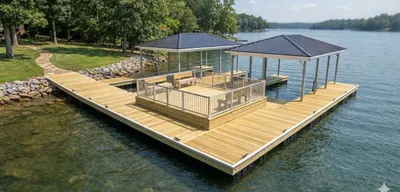
Custom Dock Construction
Custom-designed docks built for Fort Loudoun Lake conditions and TVA compliance.
Learn More →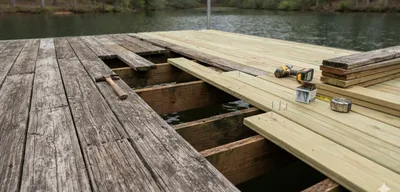
Dock Repair & Restoration
Structural repairs, decking replacement, and flotation restoration for docks on Fort Loudoun Lake.
Learn More →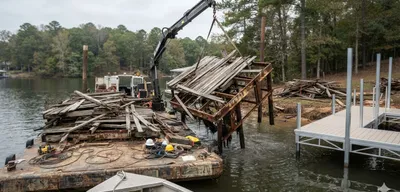
Dock Removal & Replacement
Safe demolition and removal of old docks, plus new dock installation in its place.
Learn More →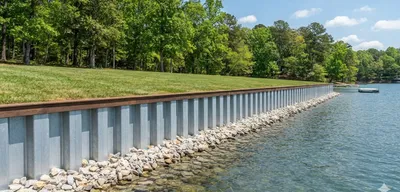
Seawall & Shoreline Construction
Protect your lakefront property from erosion with properly engineered seawalls and shoreline stabilization.
Learn More →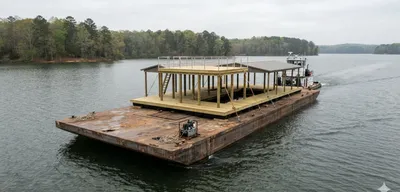
Dock Moving & Relocation
Professional dock relocation services using barge transport on Fort Loudoun Lake.
Learn More →Frequently Asked Questions
How much does a boat lift cost installed?
Boat lift cost depends on capacity, type, and whether it's being added to an existing dock or built into a new one. A manual vertical lift for a small fishing boat costs less than an electric cantilever lift for a 24-foot pontoon. Installation on an existing dock sometimes requires frame reinforcement, which adds to the project. We assess your dock, measure your boat, and quote the lift plus installation as a package — no surprise add-ons.
What size boat lift do I need?
Your lift needs to handle your boat's fully loaded weight — fuel, gear, battery, everything — plus a 20% safety margin. A boat that weighs 3,000 pounds loaded needs a lift rated for at least 3,600 pounds. Undersizing a lift burns out motors, bends frames, and damages boats. We weigh your boat (or look up the manufacturer spec) and match the lift capacity with room to spare. If you plan to upgrade to a bigger boat, size the lift for the bigger boat now.
Can you add a boat lift to my existing dock?
Usually yes, but it depends on the dock frame. The lift adds significant weight and torque to the dock structure. We inspect the frame to confirm it can support the lift, or we reinforce it if needed. Aluminum frame docks are generally easier to retrofit than wood. If your dock is too small or too old to support a lift, we'll tell you before you spend money on a lift that can't be safely mounted.
How long does a boat lift last on Fort Loudoun Lake?
A quality boat lift with proper maintenance lasts 15 to 20 years on Fort Loudoun Lake. Electric motors typically need service or replacement around the 8-10 year mark. Cables should be inspected annually and replaced every 5-7 years. The frame lasts the longest — galvanized steel frames can go 20+ years, aluminum even longer. Winterization and annual maintenance are the biggest factors in lift lifespan.
Do you service boat lifts year-round?
Yes, we service lifts spring through fall when the water is accessible. Winter service depends on drawdown and weather — if the lift is accessible and safe to work on, we'll come out. The best time to schedule lift service is early spring before you put the boat in, or fall after you pull it out. That way the lift gets inspected and repaired during downtime instead of during boating season.
Should I remove my boat lift in the winter?
On Fort Loudoun Lake, most boat lifts can stay in the water year-round if you're not using them. The key is removing the boat before drawdown so the lift isn't holding weight when the water drops. If you have a floating lift or a shallow-water installation, winter removal may be safer. We advise on the best winter plan for your specific lift and shoreline during installation.
Start your boat lift installation & repair project today
Call for a free on-site consultation. We will assess your shoreline and give you a straight estimate — no pressure, no obligation.