Seawall & Shoreline Construction in Lenoir City, TN — Protect Your Lakefront Property
Protect your lakefront property from erosion with properly engineered seawalls and shoreline stabilization.
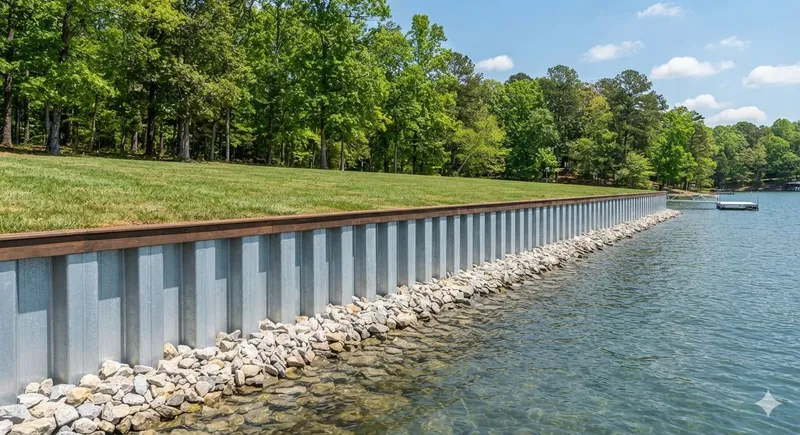
How Seawall Construction Works on Fort Loudoun Lake
Seawall construction on Fort Loudoun Lake starts with understanding what's causing your erosion and ends with a shoreline that holds. We don't just build a wall — we fix the drainage and wave dynamics that are washing your property away.
Shoreline assessment & erosion evaluation
We walk your shoreline, identify erosion patterns, check soil type, and determine what is causing the erosion. The fix has to address the cause, not just the symptom.
Material selection (riprap, bulkhead, retaining wall)
Riprap for gentle slopes and moderate erosion. Steel or vinyl bulkheads for serious erosion with vertical banks. Concrete for maximum durability. We recommend based on your specific conditions.
TVA permitting
We handle tva permitting with the specific knowledge and equipment needed for Fort Loudoun Lake conditions.
Construction & stabilization
We grade the shoreline, install the stabilization material, compact backfill, and ensure the wall or riprap is properly anchored. Construction typically takes two to five days depending on scope.
Drainage management
Water behind a seawall causes pressure that can push the wall over. We install drainage — weep holes, gravel packs, or drain pipes — so water escapes instead of building up. Proper drainage doubles a seawall lifespan.
Signs Your Shoreline Needs Stabilization
Erosion doesn't happen overnight. If you know what to look for, you can catch it early and stabilize the shoreline before you lose significant property.
Visible erosion or bank collapse
If you can see where soil has washed away — a drop-off at the waterline, exposed roots, or a scalloped shoreline — erosion is active. Stabilize before you lose more property.
Exposed tree roots at waterline
Tree roots exposed by erosion mean the soil that held them is gone. The tree will eventually fall, and the root system will not hold the bank anymore. Stabilize the shoreline before you lose the tree and the bank.
Property losing footage to the lake
If your shoreline is further back than it was five years ago, you are losing property to the lake. Erosion is gradual but relentless — a few inches a year adds up to feet over a decade.
Existing seawall cracking or leaning
A cracking seawall is losing structural integrity. A leaning seawall is close to failure. Do not wait for the wall to collapse — repair or replace it before it becomes a bigger problem.
Dock area silting in
If the water around your dock is getting shallower, erosion from upstream is depositing sediment in your area. Stabilizing the source shoreline stops the silt buildup.
Why Shoreline Erosion Accelerates on Fort Loudoun Lake
Fort Loudoun Lake's TVA-managed water levels play a major role in shoreline erosion. The annual winter drawdown drops the water 3-5 feet, which exposes the shoreline soil to air. When the water comes back up in spring, it soaks the exposed soil and waves eat at it. The freeze-thaw cycle through winter cracks the soil apart. Storm runoff from properties above the shoreline adds water that finds its way through the bank and washes soil out from behind it.
Main-channel shorelines get hammered by boat wake, especially on summer weekends. Cove shorelines are calmer but still erode from rainfall, groundwater, and the drawdown cycle. Properties with no existing stabilization lose a few inches of shoreline every year — and that adds up over a decade.
What Affects Seawall Construction Cost
Seawall pricing is measured per linear foot of shoreline, but the per-foot cost varies based on several factors. Here's what drives the budget on a shoreline stabilization project.
Linear feet of shoreline
The longer the shoreline, the more material and labor. A 50-foot shoreline costs roughly half of a 100-foot shoreline for the same stabilization method.
Wall material (riprap vs. steel vs. concrete vs. vinyl)
Riprap is the most affordable. Vinyl is mid-range. Steel is higher. Concrete is the most expensive and the most durable. The right material depends on your erosion severity and budget.
Shoreline access for equipment
We need to get a barge and equipment to your shoreline. Easy access keeps cost down. Difficult access — narrow roads, steep banks, overhead lines — adds equipment and labor.
Depth of erosion damage
Surface erosion needs less material. Deep erosion with bank collapse needs more fill, taller walls, and deeper anchoring. Severity drives the scope and cost.
Drainage requirements
Every seawall needs drainage. Simple gravel packs are affordable. Engineered drainage systems with pipes and weep holes cost more but protect the wall from hydrostatic pressure failure.
Seawall Repair vs. Full Replacement
Minor cracks and small voids in a seawall can be patched, and drainage can be improved without replacing the wall. But if the wall is leaning, bowing, or losing its footing, it's failing. Patching a failing wall buys you a year or two and costs nearly as much as starting the replacement process. We inspect the wall, check the drainage behind it, and give you an honest read on whether repair will hold or if replacement is the smart call.
Shoreline Solutions We Offer
Not every shoreline needs a vertical seawall. The right solution depends on your erosion pattern, shoreline slope, wave exposure, and budget. Here are the options we install.
Riprap installation (rock stabilization)
Graded stone placed along the shoreline to absorb wave energy. The most affordable stabilization option. Works well for moderate erosion on gentle slopes. TVA-permitted. Lasts 20-30 years.
Steel bulkhead seawalls
Vertical steel walls driven into the lakebed. The strongest seawall option. Best for serious erosion and main-channel shorelines with heavy wave action. Lasts 30-50 years with proper drainage.
Vinyl seawall systems
Lighter than steel, easier to install, and corrosion-proof. A good mid-range option for moderate erosion. Not as strong as steel for heavy wave exposure. Lasts 30-40 years.
Retaining walls
Above-water walls that hold back soil and prevent slope erosion. Used where the shoreline has a steep bank above the waterline. Can be combined with riprap or a seawall below the waterline.
Shoreline re-grading & revegetation
Reshaping the shoreline to a stable slope and planting native vegetation to hold the soil. The most natural approach — works well for mild erosion when combined with riprap at the waterline.
Ready to get a price on your seawall & shoreline construction project?
Call us or fill out the form. We will come to your shoreline, assess the conditions, and give you a written estimate — no pressure, no obligation. We respond within one business day.
(865) 606-8641Other Dock Building Services for Your Property
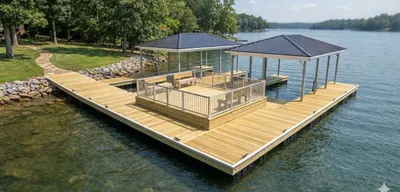
Custom Dock Construction
Custom-designed docks built for Fort Loudoun Lake conditions and TVA compliance.
Learn More →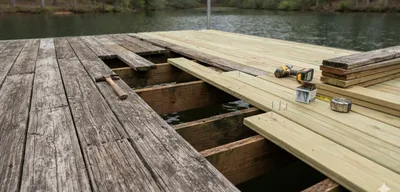
Dock Repair & Restoration
Structural repairs, decking replacement, and flotation restoration for docks on Fort Loudoun Lake.
Learn More →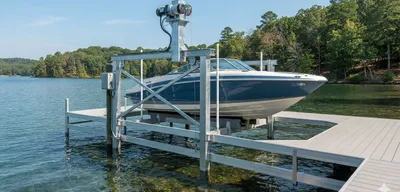
Boat Lift Installation & Repair
Protect your boat investment with properly sized and installed boat lifts on Fort Loudoun Lake.
Learn More →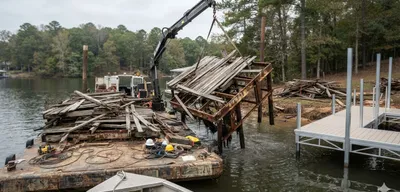
Dock Removal & Replacement
Safe demolition and removal of old docks, plus new dock installation in its place.
Learn More →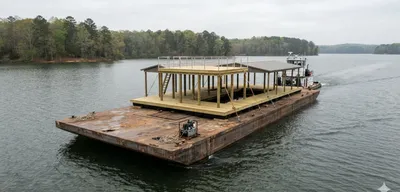
Dock Moving & Relocation
Professional dock relocation services using barge transport on Fort Loudoun Lake.
Learn More →Frequently Asked Questions
How much does a seawall cost per foot on Fort Loudoun Lake?
Seawall cost per linear foot varies widely based on material, wall height, shoreline access, and how deep the erosion has gone. Riprap — rock stabilization — is the least expensive option per foot. Steel and vinyl bulkheads cost more but provide a vertical wall that holds the shoreline firmly. Concrete is the most durable and the most expensive. We measure your shoreline, assess the erosion, and quote per linear foot with the material recommendation that fits your situation and budget.
Do I need a TVA permit for shoreline work?
Yes. Any shoreline construction on Fort Loudoun Lake — riprap, seawall, retaining wall, re-grading — requires a TVA Section 26a permit. The permit application includes engineering drawings, material specifications, and a site plan showing the work area relative to the full pool line. We handle the entire permit process, from drawing to submission to TVA coordination. TVA shoreline permits are sometimes more complex than dock permits because they involve changes to the shoreline itself.
What's the best seawall material for East Tennessee lakes?
It depends on your shoreline. Riprap (rock) is best for gentle slopes with moderate erosion — it absorbs wave energy and lets some water through. Steel bulkheads are best for vertical shorelines with serious erosion. Vinyl is a lighter alternative to steel that works well in moderate conditions. Concrete is the strongest and longest-lasting but requires heavy equipment and significant shoreline access. We recommend the material based on your specific erosion pattern, shoreline soil, and the wave exposure at your property.
How long does a seawall last?
A well-built seawall on Fort Loudoun Lake lasts 25 to 50 years depending on material and exposure. Riprap lasts 20-30 years before it needs replenishing. Steel bulkheads last 30-50 years. Vinyl seawalls last 30-40 years. Concrete lasts 50+ years. The factors that shorten lifespan are poor drainage behind the wall, extreme wave exposure on main-channel properties, and freeze-thaw damage. Proper drainage installation during construction is the single biggest factor in seawall longevity.
Can you repair an existing seawall?
Yes, depending on the damage. Minor cracking, small voids, and surface spalling can be patched. If the wall is leaning, bowing, or has lost its footing, repair is a temporary fix — replacement is the safe option. We inspect the wall from both sides, check the drainage, and tell you honestly whether repair will hold or if you're throwing money at a wall that's going to fail anyway.
Does riprap count as shoreline stabilization?
Yes. Riprap is one of the most effective and affordable forms of shoreline stabilization on Fort Loudoun Lake. It uses graded stone placed along the shoreline to absorb wave energy and prevent erosion. It's not a vertical wall, but it does stop the shoreline from washing away. Riprap is often the first recommendation for properties with mild to moderate erosion because it's less expensive than a bulkhead and doesn't require the same level of engineering. TVA permits are still required for riprap installation.
Start your seawall & shoreline construction project today
Call for a free on-site consultation. We will assess your shoreline and give you a straight estimate — no pressure, no obligation.