Boat Dock Repair in Lenoir City, TN — Restoring Docks on Fort Loudoun Lake
Structural repairs, decking replacement, and flotation restoration for docks on Fort Loudoun Lake.
How Dock Repair Works on Fort Loudoun Lake
Dock repair on Fort Loudoun Lake starts with a thorough inspection — not just what's visible from the surface, but the frame, flotation, and anchor system underneath. We check the deck boards, the framing connections, the floatation barrels or foam, the anchor chains, the hardware, and the bumpers. You get a written report of every issue we find, prioritized by safety.
Most repairs fall into one of five categories: structural reinforcement, decking replacement, flotation replacement, hardware replacement, or cosmetic restoration. Some docks need one type of repair. Others need several. We quote each repair separately so you can decide what to fix now and what to schedule later. We don't upsell repairs you don't need, and we won't ignore problems that will get worse if left alone.
Inspection & damage assessment
We inspect the dock from top to bottom — deck boards, framing, flotation, anchor chains, hardware, and bumpers. You get a written report of every issue, prioritized by safety.
Structural repair & reinforcement
If the frame is sound but a section is weak, we reinforce it — replacing bolts, adding cross-bracing, or welding cracked steel. Structural repairs extend dock life without the cost of full replacement.
Decking replacement
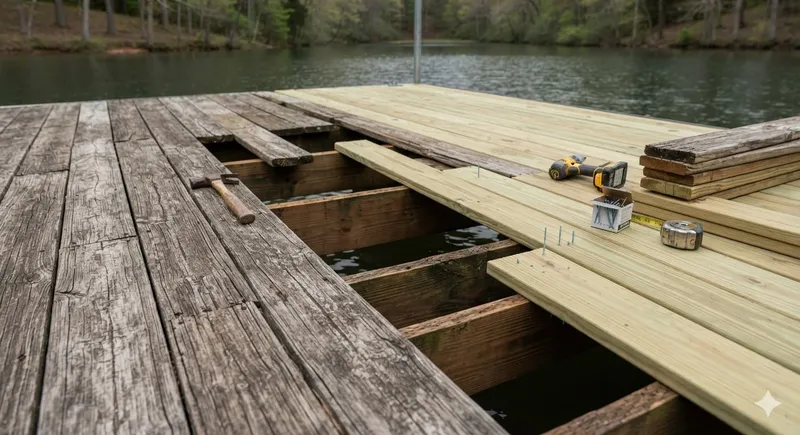
Replacing deck boards is the most common dock repair. We remove old boards, inspect the joists underneath, and install new wood or composite decking. A one-day job in most cases.
Flotation replacement
When foam absorbs water or barrels crack, the dock sits lower. We replace flotation with new closed-cell foam or polyethylene barrels, restoring buoyancy and adding years to the frame life.
Hardware & cleat replacement
Rusted cleats, bent bumpers, and loose guideposts are safety hazards. We replace hardware with galvanized or stainless components that handle Fort Loudoun wet-dry cycle without corroding.
Signs Your Dock Needs Repair
Docks don't fail all at once — they give you warning signs first. If you catch these early, repair is cheap and simple. Wait too long and the damage spreads to the structural frame, turning a small fix into a major project.
Sagging or uneven deck surface
If the deck has a dip, bounce, or slope, something underneath is failing — usually flotation, framing, or a connection. Sagging does not fix itself. It gets worse with every wave and every winter.
Loose or rusted hardware
Check cleats, bolts, and brackets annually. Loose hardware means the connection is wearing. Rusted hardware means it is losing strength. Replace before it fails completely.
Rotting wood decking or framing
Push a screwdriver into wood components. If it goes in easily, the wood is rotted. Surface rot on decking is a board replacement. Deep rot in framing is a structural issue.
Sinking or listing dock sections
If one corner of the dock is lower than the rest, flotation has failed in that section or the frame has shifted. A listing dock is unsafe and will get worse.
Damaged bumpers or guideposts
Bumpers protect your boat from the dock. When they crack, tear, or fall off, the dock frame takes the impact. Replace bumpers before the frame damage starts.
Why Docks Deteriorate on Fort Loudoun Lake
Fort Loudoun Lake is tough on docks. The TVA winter drawdown drops water 3 to 5 feet every year, which means your dock frame and flotation cycle between wet and dry exposure. That wet-dry cycle accelerates rot in wood and corrosion in steel. The freeze-thaw cycle through the winter pushes water into cracks and splits them wider. UV exposure bakes the life out of deck boards and rubber bumpers.
Main-channel docks take a beating from boat wake, especially on summer weekends when the lake is busy. Wave action stresses every bolt and weld on the frame. Cove docks get less wave action but sometimes sit in shallower water, which means the dock rests closer to the bottom during drawdown. If the dock isn't anchored with enough chain, it can drag or tip when the water drops. Age catches up with every dock eventually — 20 years is a good long life for a wood frame dock on Fort Loudoun.
What Affects Dock Repair Cost
Repair pricing depends on what's broken, what it's made of, and how hard it is to reach. Here's what drives the cost on a typical Fort Loudoun Lake repair project.
Extent of structural damage
Surface repairs — boards, bumpers, hardware — are affordable. Frame repairs — welding, reinforcing, replacing sections — cost more and may point toward replacement.
Material type (wood vs. aluminum vs. steel)
Wood dock repairs involve replacing rotted components. Aluminum docks need welding when frames crack. Steel docks need rust treatment and galvanizing. Each material has different repair costs.
Access to the dock site
Easy barge access means straightforward removal. Tight coves, shallow approaches, or overhead lines complicate logistics and add cost.
Whether barge access is needed
Most structural repairs require a barge to reach the dock from the water. We own our barge, so scheduling is under our control. If a repair can be done from shore, we do it that way to save cost.
Size of the repair area
Fixing one bad board is a quick job. Resurfacing an entire dock deck takes a day. Replacing all flotation takes two days. The scope of repair directly drives the cost.
Dock Repair vs. Full Replacement
The 50% rule is our starting point. If your repair estimate comes in above half the cost of a new dock, replacement is usually the smarter call. But the decision isn't purely mathematical. A 15-year-old dock with great bones and one bad section is worth repairing. A 25-year-old dock with surface issues masking frame rot is a money pit. We inspect honestly, tell you what we find, and let you make the call with real numbers — not fear-based upselling.
Dock Restoration: Bringing Old Docks Back to Life
Restoration sits between repair and replacement. Your dock frame is still solid, but the surface and components look tired. Restoration refreshes the parts you see and touch without the cost of a full rebuild.
Decking resurfacing
New boards transform the look and feel of an old dock. Composite decking costs more up front but does not rot, splinter, or need staining. Wood is the affordable choice and still looks great when fresh.
Roof replacement
Metal roofs on covered docks take sun, rain, and wind for years. When they rust or leak, we replace the panels and inspect the roof frame. A new roof extends the life of the entire dock.
Flotation upgrade
Old flotation — especially steel barrels and open-cell foam — degrades and absorbs water over time. Upgrading to modern closed-cell foam adds buoyancy, raises the dock, and extends frame life.
Paint/stain restoration
A fresh coat of stain on wood decking or paint on metal framing makes an old dock look new. It also protects the material from UV and moisture. Cosmetic, yes, but it adds real years to the surface.
Hardware modernization
Swapping old hardware for galvanized or stainless cleats, hinges, and brackets prevents failures and improves safety. Modern hardware lasts longer and looks better than what was installed 20 years ago.
Ready to get a price on your dock repair & restoration project?
Call us or fill out the form. We will come to your shoreline, assess the conditions, and give you a written estimate — no pressure, no obligation. We respond within one business day.
(865) 606-8641Other Dock Building Services for Your Property
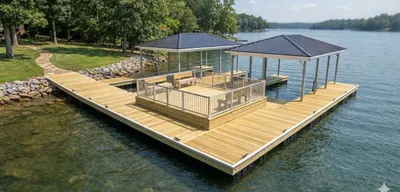
Custom Dock Construction
Custom-designed docks built for Fort Loudoun Lake conditions and TVA compliance.
Learn More →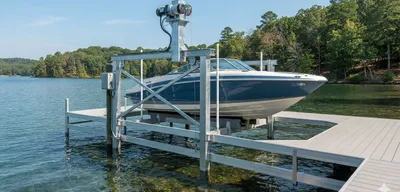
Boat Lift Installation & Repair
Protect your boat investment with properly sized and installed boat lifts on Fort Loudoun Lake.
Learn More →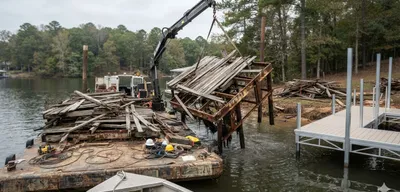
Dock Removal & Replacement
Safe demolition and removal of old docks, plus new dock installation in its place.
Learn More →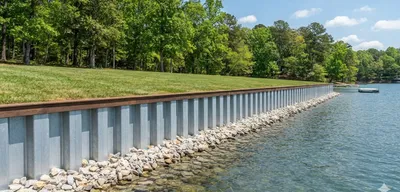
Seawall & Shoreline Construction
Protect your lakefront property from erosion with properly engineered seawalls and shoreline stabilization.
Learn More →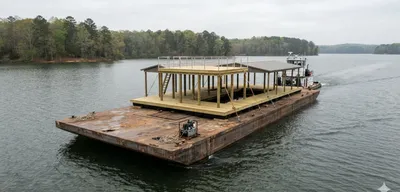
Dock Moving & Relocation
Professional dock relocation services using barge transport on Fort Loudoun Lake.
Learn More →Frequently Asked Questions
How much does dock repair cost on Fort Loudoun Lake?
Dock repair cost depends on the extent of damage and materials involved. Replacing a few deck boards is a different project from reinforcing a sagging frame or replacing all flotation barrels. We inspect your dock, identify every issue — including the ones you can't see from above — and give you a written repair quote that breaks down each fix. Minor repairs often cost less than you'd expect. Major structural repairs are when we start comparing repair cost to full replacement.
Can you repair a dock in the winter?
Yes, and winter is actually a good time for certain repairs. During TVA winter drawdown, the water drops 3-5 feet, which exposes the upper portion of your dock frame and makes some repairs easier to reach from a barge. However, weather conditions can delay scheduling, and ice is a hard limit — we don't work when ice is present. If you have a winter repair need, call us and we'll assess whether it can be done during drawdown or should wait for spring pool.
How do I know if my dock needs repair or full replacement?
We use the 50% rule: if the cost of repairing your dock exceeds half the cost of building a new one, replacement is the better investment. But the rule isn't just about money. If your dock frame is structurally sound but the decking and flotation need replacing, repair makes sense even at a higher percentage. If the frame itself is failing — rusted steel, rotted wood joints, cracked welds — replacement is the only safe option. We give you an honest assessment either way.
Do you handle emergency dock repairs?
Yes. If a storm has damaged your dock, a section is sinking, or the dock has become a safety hazard, call us and we'll prioritize the inspection. Emergency repairs focus on stabilizing the dock and preventing further damage. Once the immediate issue is secured, we schedule the full repair. Storm damage on Fort Loudoun Lake happens most often from high winds and boat wake in the main channel.
How long does a dock repair take?
Minor repairs — replacing deck boards, swapping cleats, fixing bumpers — can be done in a single day. Flotation replacement usually takes one to two days. Structural reinforcement or partial frame replacement takes two to four days depending on extent and barge access. We give you a timeline with every quote and stick to it.
Can you replace just the decking without rebuilding the whole dock?
Yes, if the frame underneath is solid. We inspect the frame before quoting a decking-only replacement. If the framing is sound, we remove old boards, check the joists, and install new decking — wood or composite. If we find frame damage during inspection, we'll tell you before proceeding so you can decide whether to repair the frame too or just replace the boards as a stopgap.
Start your dock repair & restoration project today
Call for a free on-site consultation. We will assess your shoreline and give you a straight estimate — no pressure, no obligation.