Custom Boat Dock Construction in Lenoir City, TN — Built for Fort Loudoun Lake
Custom-designed docks built for Fort Loudoun Lake conditions and TVA compliance.
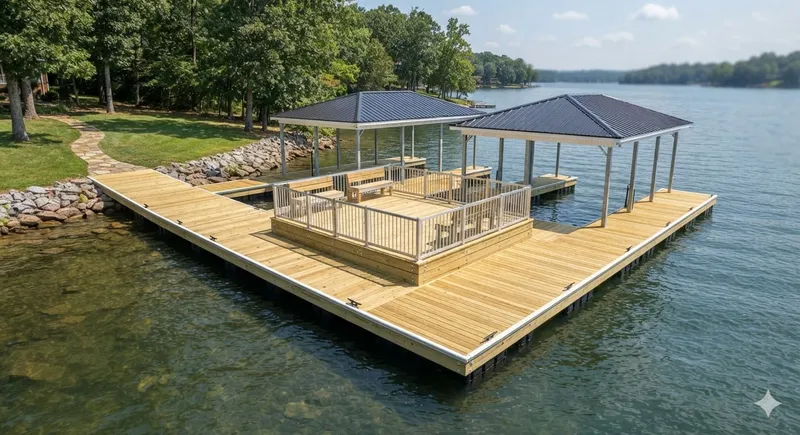
How Custom Dock Construction Works in Lenoir City
Custom dock construction on Fort Loudoun Lake starts with a shoreline visit and ends with a dock built to handle TVA drawdown, wave action, and your specific boat. Every project follows the same five-step process, adapted to your property and the lake conditions where you live.
First, we walk your shoreline and measure water depth at normal pool and estimated winter drawdown levels. We look at your shoreline soil, existing structures, and barge access. Then we sit down with you to discuss boat size, slip count, decking material, roofing, and any additions like a sundeck or swim platform. You get a written estimate and a 3D sketch of the proposed dock before any dirt moves.
Once you approve the design, we file the TVA Section 26a permit application and handle all communication with TVA. Permitting takes two to four weeks. While we wait, we order materials and fabricate the dock frame in our shop. When the permit clears and weather cooperates, we barge the frame to your shoreline, anchor it, install decking and hardware, and walk you through the finished dock before we pack up.
Site evaluation & shoreline assessment
We walk your shoreline, measure water depth at normal pool and drawdown, check soil type, and evaluate barge access. Every dock design starts with what we find at your property.
Design & material selection
Based on your boat, budget, and shoreline, we design the dock and select framing, decking, flotation, and hardware. You get a 3D sketch and material list before construction starts.
TVA Section 26a permitting
We prepare and file the TVA Section 26a permit application — drawings, specifications, and all paperwork. You sign, we handle the rest. Permitting typically takes two to four weeks.
Fabrication & barge installation
We fabricate the dock frame in our shop, barge it to your shoreline, set the anchors, and install the dock. Most installations take three to five days on the water.
Final inspection & walkthrough
We walk you through the finished dock, check every connection, test the hardware, and hand over the warranty paperwork. If anything needs adjusting, we fix it before leaving.
Signs You Need a New Dock Built
Not every old dock needs replacing, but some warning signs mean a new dock is safer and cheaper than continued repair. If you're seeing any of these issues, it's time to call us for an assessment.
Your dock is 20+ years old
A wood-frame dock over 20 years old has reached the end of its structural life. Even if it looks okay from above, the underwater connections and anchor chains have been degrading for two decades. Replacement is the safer, smarter investment.
Rotting or rusting structural members
If you can push a screwdriver into wood framing by hand, the wood is rotted through. If steel framing has visible rust scale or pitting, the structural integrity is compromised. These are not surface issues — they are frame failures waiting to happen.
Dock no longer level or stable
A dock that bounces, lists to one side, or feels unstable underfoot has a structural problem. It could be flotation failure, anchor chain damage, or frame weakness. If the dock moves when you walk on it, do not wait for it to get worse.
Outgrown your current dock layout
You bought a bigger boat. You added a PWC. Your family needs more deck space. If your dock does not fit how you use the water anymore, a new dock designed for your current needs is the answer.
Why Dock Construction on Fort Loudoun Lake Is Different
Fort Loudoun Lake isn't a natural lake — it's a TVA-managed reservoir. That means the water level isn't constant. Every winter, TVA drops the pool 3 to 5 feet for flood control. Your dock has to float down with the water and come back up without dragging on the bottom, stressing the frame, or pulling free from its anchors. We design every dock with enough flotation and anchor chain length to handle the full drawdown range.
Shoreline conditions vary a lot around the lake. Main-channel properties face wave action from bass boats and cruisers. Cove properties have calmer water but sometimes shallower depths, which means your dock needs to extend further to reach navigable water. Soil types range from clay to gravel to limestone shelf, and each one requires different anchoring methods. We've been building on Fort Loudoun for 15 years and know what works on every section of shoreline.
What Affects Dock Construction Cost
Dock construction pricing is driven by materials, size, and site conditions. No two quotes are identical because no two shorelines are. Here's what determines the budget on a custom dock project.
Dock size & slip configuration
A single-slip dock costs less than a two-slip. Adding a sundeck, roof, or PWC port increases the price. The bigger the dock, the more material, flotation, and labor — but the cost per square foot drops as size increases.
Material choice (wood vs. aluminum vs. steel)
Aluminum is the most popular — light, rust-resistant, and durable. Steel is stronger and better for heavy covered docks but costs more and needs maintenance. Wood is the most affordable but has the shortest lifespan.
Roof/sundeck additions
A roof adds shade and protects your boat from sun and rain. A sundeck adds usable space for swimming, fishing, or relaxing. Both add cost but significantly increase the dock functionality and value.
Boat lift integration
Building a boat lift into a new dock is cheaper than retrofitting one later. If you think you will want a lift, design the dock frame to support it from day one.
Shoreline access & barge logistics
If your shoreline is easy to reach by barge, installation is straightforward. If access is tight — narrow coves, shallow water, overhead lines — we plan the logistics and it adds to the project cost.
Permitting & engineering
TVA Section 26a permits are required for all new dock construction. We include permit handling in every project. Engineering for complex shorelines — steep drops, soft soil, unusual configurations — may add cost.
Repair vs. Full Dock Replacement
If your existing dock has a few bad boards or a rusted cleat, repair makes sense. But when the structural frame starts failing, you're looking at a tougher question. The general rule: if repair costs more than half the price of a new dock, rebuild. Putting new decking on a rotted frame wastes money because the frame will fail within a few years and you'll be back to square one — minus the decking you just paid for.
Age is the other factor. A dock over 20 years old with original framing has lived its useful life. Even if it looks okay from the surface, the underwater connections and anchor chains have been degrading for two decades. We inspect old docks honestly. If repair is the right call, we tell you. If replacement is the smarter long-term investment, we tell you that too.
Custom Dock Design Options
Your dock should fit how you use the water. Some homeowners want a simple single-slip platform for a fishing boat. Others want a multi-slip dock with a sundeck, boat lift, and PWC port for the whole family. Here are the design choices we build most often.
Single-slip & multi-slip docks
We handle single-slip & multi-slip docks with the specific knowledge and equipment needed for Fort Loudoun Lake conditions.
Sundeck & shade deck docks
We handle sundeck & shade deck docks with the specific knowledge and equipment needed for Fort Loudoun Lake conditions.
Roofed docks & boathouses
We handle roofed docks & boathouses with the specific knowledge and equipment needed for Fort Loudoun Lake conditions.
Aluminum vs. steel vs. wood framing
We handle aluminum vs. steel vs. wood framing with the specific knowledge and equipment needed for Fort Loudoun Lake conditions.
Composite vs. wood decking
We handle composite vs. wood decking with the specific knowledge and equipment needed for Fort Loudoun Lake conditions.
Swim platforms & PWC ports
We handle swim platforms & pwc ports with the specific knowledge and equipment needed for Fort Loudoun Lake conditions.
Ready to get a price on your custom dock construction project?
Call us or fill out the form. We will come to your shoreline, assess the conditions, and give you a written estimate — no pressure, no obligation. We respond within one business day.
(865) 606-8641Other Dock Building Services for Your Property
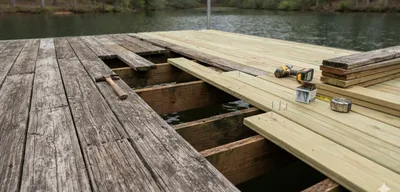
Dock Repair & Restoration
Structural repairs, decking replacement, and flotation restoration for docks on Fort Loudoun Lake.
Learn More →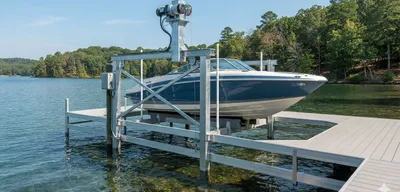
Boat Lift Installation & Repair
Protect your boat investment with properly sized and installed boat lifts on Fort Loudoun Lake.
Learn More →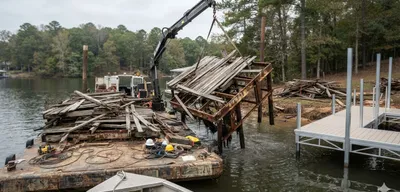
Dock Removal & Replacement
Safe demolition and removal of old docks, plus new dock installation in its place.
Learn More →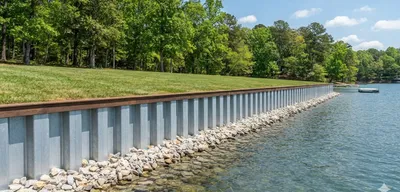
Seawall & Shoreline Construction
Protect your lakefront property from erosion with properly engineered seawalls and shoreline stabilization.
Learn More →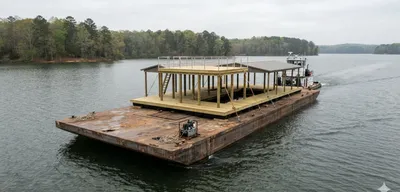
Dock Moving & Relocation
Professional dock relocation services using barge transport on Fort Loudoun Lake.
Learn More →Frequently Asked Questions
How much does a custom dock cost on Fort Loudoun Lake?
Dock construction cost on Fort Loudoun Lake depends on size, materials, roofing, boat lift integration, and shoreline access. A single-slip aluminum dock with wood decking runs less than a multi-slip steel frame dock with a sundeck and boat lift. During your free on-site consultation, we measure your shoreline, discuss your boat and usage, and give you a written estimate with no hidden line items. No two docks cost the same because no two shorelines are identical.
How long does it take to build a new dock?
From the day you sign the contract to the day we bolt the last plank, most custom dock projects take four to eight weeks. TVA Section 26a permitting alone can eat two to four of those weeks — we handle all of that paperwork so you don't wait on it. Construction itself usually takes three to five days on the water, weather permitting. Barge scheduling, water levels, and material availability all affect timing. We give you a real timeline at the start and update you if anything shifts.
Do I need a TVA permit, and do you handle that?
Yes. Every dock on Fort Loudoun Lake requires a TVA Section 26a permit before construction begins. The application includes site drawings, dock specifications, and shoreline documentation. We handle the entire permitting process — filling out forms, submitting drawings, coordinating with TVA, and tracking the application to approval. You sign the application and we do the rest. Most homeowners don't want to deal with federal paperwork, and honestly, they shouldn't have to.
What's the best material for a dock on Fort Loudoun Lake?
Aluminum framing with composite or wood decking is the most popular combination for Fort Loudoun Lake. Aluminum doesn't rust, weighs less than steel, and handles the 3-5 foot winter drawdown without stress. Steel framing is stronger and better for heavy covered docks, but it requires galvanizing and regular maintenance. Wood framing is the traditional choice and still works, but it has the shortest lifespan in lake water. We'll recommend the best material for your specific shoreline, water depth, and budget after seeing your property.
Can I add a sundeck or roof to my dock later?
Yes, but it's cheaper and easier to design for additions upfront. If you think you might want a sundeck, roof, or boat lift down the road, tell us during the design phase. We can engineer the dock frame to support the extra weight and leave attachment points for future additions. Retrofitting a roof onto a dock that wasn't designed for the load is sometimes possible but often requires reinforcing the frame, which costs more than planning ahead.
What size dock do I need for my boat?
Your dock needs to be at least 4 feet longer and 2 feet wider than your boat to allow safe boarding and tying off. A 22-foot pontoon needs a minimum 26-foot slip with 10-foot beam width. If you plan to upgrade to a larger boat in a few years, build the slip for that boat now — widening a slip later means rebuilding the frame. We measure your boat (or its trailer) during the consultation and size the dock to fit your current and future plans.
Start your custom dock construction project today
Call for a free on-site consultation. We will assess your shoreline and give you a straight estimate — no pressure, no obligation.